


Cephalosporin antibiotics are among the most widely used clinically, featuring a β-lactam ring structure. They share structural similarities and mechanisms of action with penicillins, carbapenems, and monobactams, and currently represent the most extensively utilized class of antibiotics. Nearly all cephalosporin antibiotics are semi-synthetic products. The mainstream production method involves fermenting key intermediates such as 7-aminocephalosporanic acid (7-ACA), 7-amino-3-deacetoxycephalosporanic acid (7-ADCA), , and 7-benzylamino-3-chloromethylcephalosporanic acid p-methoxybenzyl ester (GCLE). These key intermediates are then chemically linked to different side chains to yield various cephalosporin products.
I. High Market Share of Cephalosporin Antibiotics
According to a Global Market Insight report, the global antibiotic market reached $45.6 billion in 2023, with cephalosporins accounting for 31% of this market. In the domestic market, data from the Pharmaceutical Database (PDB) indicates that cephalosporin antibiotics constituted 41% of prescriptions in sampled hospitals during 2022. Given that cephalosporins are predominantly administered intravenously in hospital settings while oral formulations are more common in outpatient settings, the proportion of cephalosporins used outside hospitals is relatively lower. Taking these factors into account, the overall market share of cephalosporin antibiotics in China is estimated at approximately 35%.
II. Domestic Policies Drive High-Quality Development of Cefalosporin-Related Industries
The 2019 edition of the Catalogue of Industrial Structure Adjustment (2019 Edition) issued by the National Development and Reform Commission (NDRC) classified new production facilities for industrial-grade penicillin salt, chemically produced 7-ACA, chemically produced 7-ADCA, and cephalosporin C fermentation as restricted categories. The December 2023 update to the Catalogue (2024 Edition) removed the qualifiers “chemical production” before 7-ACA and 7-ADCA and “fermentation” after cephalosporin C, further narrowing the scope of restricted development. The NDRC mandates the transformation of existing capacity and prohibits new construction for restricted industries, targeting production processes, technologies, equipment, and products.
Domestic policy adjustments continuously drive technological optimization and equipment upgrades in the cephalosporin industry. Chinese enterprises are increasingly elevating their position within the global cephalosporin antibiotic supply chain. From upstream fermentation and intermediate synthesis to bulk API production and formulation manufacturing, Chinese companies possess comprehensive production facilities and capabilities. This not only meets domestic pharmaceutical demand but also provides robust assurance for the global supply of cephalosporin antibiotics.
III. Steady Growth in China’s Export of Cephalosporin APIs and Intermediates
China is a major producer and exporter of cephalosporin APIs and intermediates, with export volumes showing steady growth in recent years. According to data compiled by the China Chamber of Commerce for Import and Export of Medicines and Health Products based on China Customs statistics (same below), China’s exports of cephalosporin APIs and intermediates increased from $433 million to $792 million between 2015 and 2024, representing a compound annual growth rate (CAGR) of 6.9%.
Ceftriaxone, Cefalexin, Cefotaxime, Cefazolin, along with core cephalosporin intermediates such as GCLE, 7-ACA, and 7-ADCA, dominate China’s exports of cephalosporin APIs and intermediates. Ceftriaxone has consistently been China’s largest export product among cephalosporin APIs and intermediates, maintaining an export share of approximately 30%. Cephalosporin core intermediates rank as the second-largest export category, accounting for 17%-19% of China’s total cephalosporin API and intermediate exports in recent years. The combined export share of cefazolin, cefotaxime, and cefazolinine ranges between 15% and 20%.
1. Ceftriaxone exports maintain relative stability
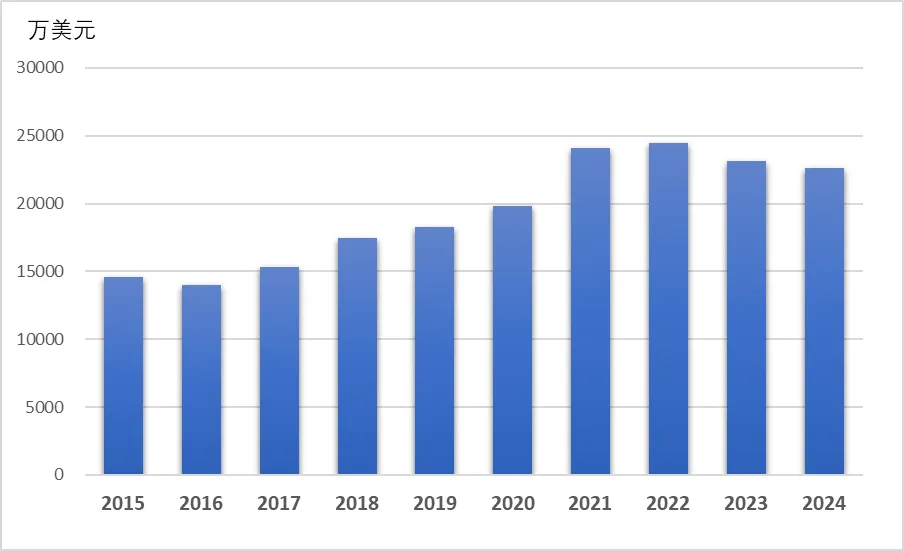
As the largest contributor to China’s cephalosporin API and intermediate exports, ceftriaxone has consistently demonstrated stable export performance. As shown in Figure 1, export value increased from $146 million to $241 million between 2015 and 2021, achieving a compound annual growth rate (CAGR) of 9.2%. Export volume grew steadily, peaking at 3,137 tons in 2021. From 2021 to 2024, ceftriaxone exports remained relatively stable, with export value hovering around $230 million and volume maintaining approximately 2,900 tons. In 2024, China’s ceftriaxone API exports totaled $226 million, marking a 2.3% year-on-year decline and a slight adjustment.
Figure 1: Export Trends of Ceftriaxone API from China, 2015–2024 (US$ million)
Ceftriaxone, as a broad-spectrum third-generation cephalosporin antibiotic, offers advantages such as a wide antimicrobial spectrum, potent antibacterial activity, and stability against β-lactamases. Consequently, China’s ceftriaxone active pharmaceutical ingredient (API) is highly sought after globally. In 2024, India, Pakistan, and Russia ranked as China’s top three export markets for ceftriaxone. India accounted for nearly half of the total exports, valued at $113 million, while Pakistan and Russia represented 8% and 6% respectively. Markets from fourth to twentieth place each recorded export volumes in the millions of dollars.
2. Cefazolin Nucleus Intermediate Supply and Demand Reach Equilibrium
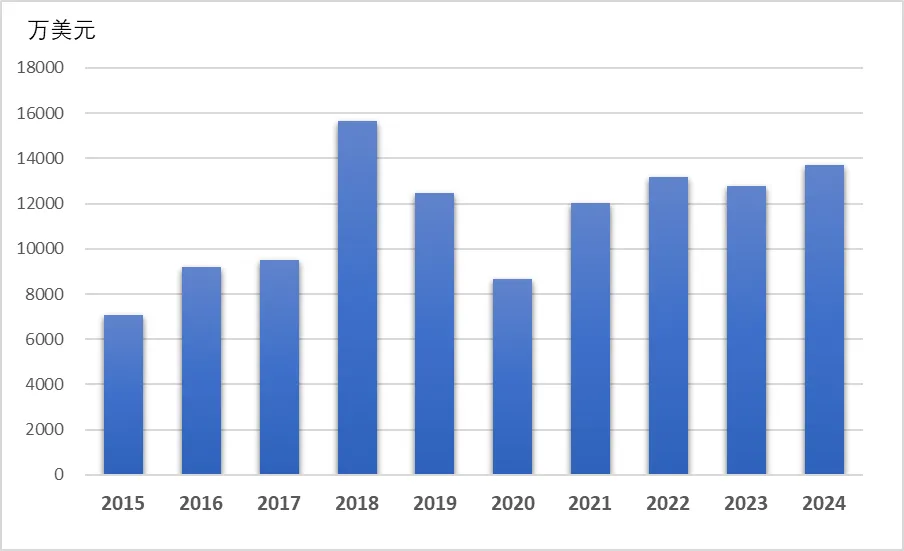
Cefazolin nucleus intermediates are primarily fermentation-derived. China’s long-term investment in fermentation technology has yielded significant cost advantages, establishing the country as a major producer and exporter of this intermediate. As shown in Figure 2, export value increased from $70.63 million to $137 million between 2015 and 2024, representing a compound annual growth rate (CAGR) of 8.0%. India is the primary export market for China’s cephalosporin core intermediates, accounting for over 80% of exports, followed by Pakistan at approximately 8%. In 2018, exports of cephalosporin core intermediates to India surged to a historical peak of $156 million. This was followed by a correction in 2019. In 2020, overseas factories were unable to operate due to the pandemic, leading to a further decline in China’s exports of these intermediates. Since 2021, overseas demand has recovered and remained relatively stable, with China’s exports of cefazolin intermediate maintaining at around 1,800 tons.
Figure 2: Export Trends of Cefamandox Intermediates from China, 2015–2024 (US$ million)
3. Robust Market Demand for Cefalexin
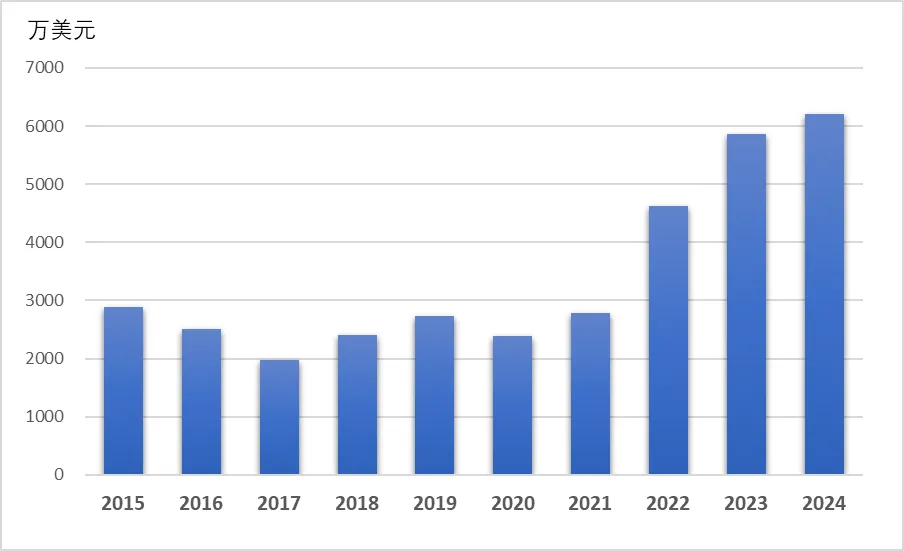
Cefalexin is a commonly used oral antibiotic characterized by high oral bioavailability, ease of administration, and excellent patient compliance. As shown in Figure 3, from 2015 to 2020, China’s export value of cefazolin API remained stable at around $25 million, while export volume fluctuated between 500 and 600 tons. Following the outbreak of the COVID-19 pandemic, global cases of respiratory infections increased significantly, with bacterial pneumonia cases rising sharply. This surge drove up global demand for oral cephalosporin antibiotics. Consequently, China’s export volume of cefazolin API has surged since 2021. From 2021 to 2024, export value grew from $27.82 million to $62.09 million, achieving a compound annual growth rate (CAGR) of 30.7%.
Figure 3: Trend of China’s Cefazolin API Exports (2015-2024) (USD million)
China’s export market for cefazolin is relatively fragmented, with shipments reaching 51 countries and regions in 2024. The top ten export markets accounted for 85% of total exports. India ranked first, with China’s cefazolin exports to India reaching $10.3 million in 2024, a 46.6% year-on-year increase. Taiwan, Vietnam, Algeria, and the United Arab Emirates ranked second through fifth, with export values ranging from $5 million to $10 million.
4. Cefotaxime Shows Uptrend Amid Fluctuations
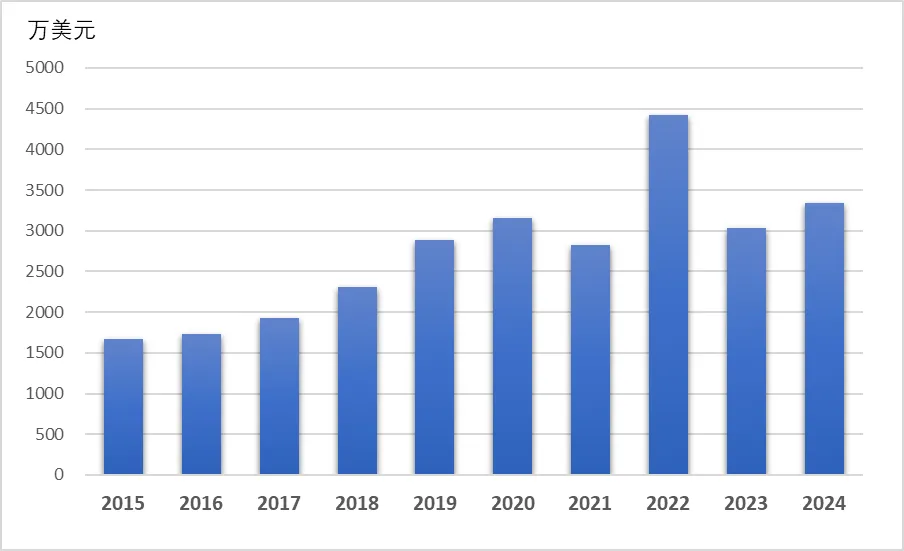
Compared to ceftriaxone and cefalexin, cefotaxime exports remain relatively low. As shown in Figure 4, China’s cephalothin API exports grew from $16.65 million to $33.37 million between 2015 and 2024, achieving an 8.0% CAGR. Vietnam and India are the top two export markets for China’s cephalothin. In 2024, these two markets accounted for half of China’s cefotaxime export volume, with Vietnam reaching $8.99 million and India at $8.30 million. That same year, exports to Egypt surged rapidly, becoming the third-largest market with $5.27 million in exports—a 168% year-on-year increase.
Cefotaxime is a third-generation cephalosporin antibiotic with broad-spectrum antibacterial activity, used to treat various infectious diseases such as respiratory tract infections, urinary tract infections, and intra-abdominal infections. Its widespread use aligns with export patterns to countries experiencing higher incidence rates of infectious diseases. Russia, Pakistan, Indonesia, and Thailand ranked fourth to eighth, respectively, in China’s cefotaxime export market.
Figure 4: Export Trends of Cefotaxime API from China, 2015–2024 (US$ million)
5. Cefazolin Exports Return to Normal
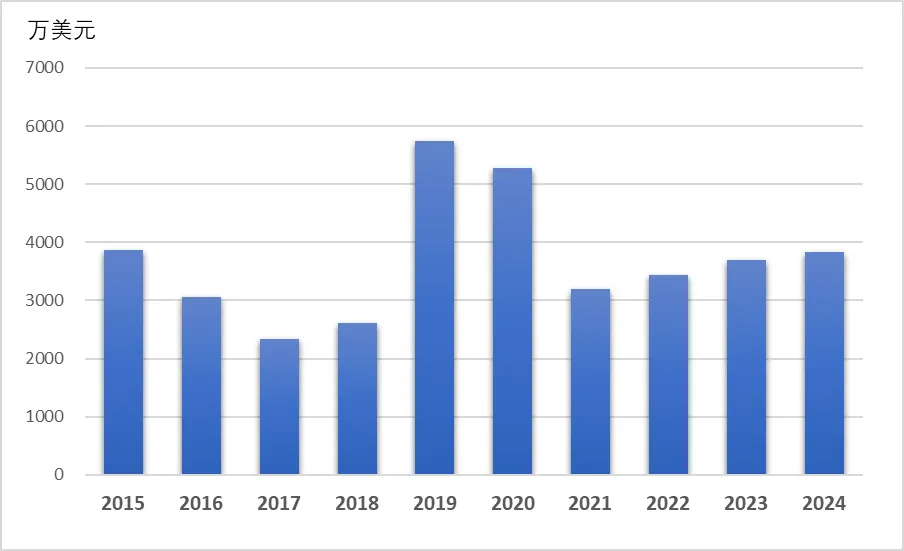
Cefazolin is primarily used for perioperative infection prevention and treating mild to moderate bacterial infections (such as skin and soft tissue infections, urinary tract infections, etc.), with market demand directly correlated to the total number of surgeries performed. As shown in Figure 5, from 2015 to 2017, declining overseas demand led to a simultaneous drop in both volume and price of China’s cefazolin API exports, prompting production cuts by manufacturers. Long-term supply-demand mismatches, compounded by pandemic-induced fluctuations in surgical volumes (initially rising then falling), resulted in abnormal export growth during 2019-2020. The subsequent four years saw a gradual return to normalcy. In 2024, China’s cefazolin exports reached $38.29 million, marking a 3.7% year-on-year increase.
Similar to the market distribution of cefazolin, China’s export markets for cefazolin are also relatively fragmented, with exports reaching 48 countries and regions in 2024. The top ten export markets accounted for 69% of total exports. Turkey, the United Arab Emirates, and Russia ranked as the top three export destinations for China’s cefazolin, each generating export revenues between $4.2 million and $4.5 million.
Figure 5: Trend of China’s Cefazolin API Exports (2015-2024) (USD million)
IV. India Introduces Policies to Promote Localization of Cefazolin Industry
Since 2020, the Indian government has implemented multiple measures to encourage domestic pharmaceutical production, aiming to reduce reliance on imports, boost domestic manufacturing, and attract substantial investment. The Production-Linked Incentive (PLI) scheme was launched in July 2020. The PLI scheme is a comprehensive initiative by the Indian government to advance key manufacturing sectors and elevate India’s position in global supply chains. It provides specific guidelines for 53 active pharmaceutical ingredients (APIs), including ceftriaxone, cefazolin, cefoperazone, cefuroxime, and multiple critical intermediates such as 7-Aminoquinoline (7-ACA). Under the scheme, eligible companies can receive up to 20% sales incentives.
Data as of December 2024 shows that India’s Ministry of Chemicals and Fertilizers, Department of Pharmaceuticals has approved 48 projects, with 34 projects initiated involving 25 APIs and intermediates. The scheme has attracted investments totaling 41.6 billion rupees, with cumulative sales of 13.3 billion rupees (including 3.9 billion rupees in export revenue) generated by participating companies. Among the approved applicants, two companies produce 7-ACA: Karnataka Antibiotics and Pharmaceuticals Limited and Orchid Bio-Pharma Limited.
India’s series of domestic pharmaceutical incentive policies have spurred the growth of its pharmaceutical industry. However, the development of India’s domestic sector still requires time to mature, and it remains significantly behind China’s well-established cephalosporin industry.
V. China’s Exports of Cephalosporin APIs and Intermediates to India Remain Robust
From 2015 to 2024, export value increased from $148 million to $294 million, representing a compound annual growth rate (CAGR) of 7.8%. Based on the current situation, India’s pharmaceutical incentive policies are unlikely to significantly impact China’s exports of cephalosporin APIs and intermediates.
Looking at specific products:
– Exports of cephalosporin core intermediates to India have maintained rapid annual growth since 2020. In 2024, exports reached $114 million, a 5.8% year-on-year increase. The major product ceftriaxone API recorded exports of $113 million in 2024, a 3.0% year-on-year decrease. Despite this slight decline, its export trend has remained relatively stable over the years. Cefalexin API has maintained rapid growth since 2020, with exports reaching $10.3 million in 2024, a 46.6% year-on-year increase, indicating promising future prospects. Although exports of cefotaxime and cefazolin APIs to India remained modest in total volume, they maintained growth momentum. In 2024, cefotaxime API exports reached $8.3 million, up 14.3% year-on-year, while cefazolin API exports amounted to $2.81 million, surging 40.4% year-on-year. The only product category showing a significant decline in exports to India was cefoperazone API. Exports reached $12.81 million in 2024, down 14.4% year-on-year, with substantial decreases observed in both the previous and current years.
VI. Challenges and Opportunities Coexist
Looking ahead, China’s exports of cephalosporin APIs and intermediates hold promising prospects, yet they also face numerous opportunities and challenges.
From a market demand perspective, the fundamental need for anti-infective drugs continues to grow in regions such as Africa and Latin America. The global demand for cephalosporin antibiotics remains on the rise, providing enterprises with room to expand production capacity.
Regarding manufacturing development in China and India, both nations are intensifying efforts in pharmaceutical production, continuously enhancing local manufacturing capabilities, accelerating technological upgrades, and effectively reducing production costs. Currently, the complementary strengths between China and India in the cephalosporin industry remain largely unchanged. Deepened cooperation between the two countries in the cephalosporin antibiotic sector will continue to contribute to global drug accessibility and affordability, achieving mutual benefit.
Regarding hidden costs like ocean freight rates, persistently high international shipping prices, coupled with container shortages on certain routes and port congestion, have significantly increased export costs for cephalosporin APIs and intermediates. This impact is particularly pronounced for bulk intermediate products with lower unit values, where freight costs now account for a larger proportion, substantially compressing profit margins and influencing export decisions to some extent.
Amid intensifying global competition, China—as the world’s largest producer of APIs—has further solidified its competitive edge in international markets through its comprehensive production chains and robust supply chain resilience. Moving forward, China’s exports of cephalosporin APIs and intermediates will advance steadily amid opportunities and challenges, continuously expanding into international markets and contributing to the global pharmaceutical supply.