


Market Dynamics and Growth Engines Market Dynamics and Growth Drivers
1. Overall Overview
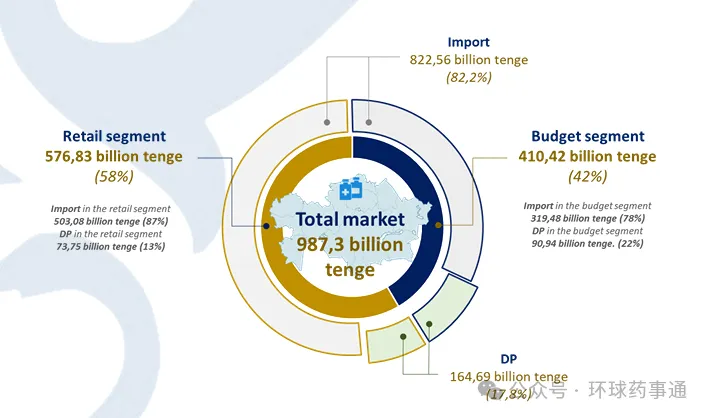
Kazakhstan’s pharmaceutical market is undergoing structural transformation. According to IQVIA data, the market reached 987.3 billion tenge (approximately $1.91 billion) in 2023, marking a 15.4% year-on-year increase. In terms of supply structure, domestic pharmaceutical production capacity remains relatively weak. Data from Kazakhstan’s Ministry of Finance and Agency for Strategic Planning and Reform indicates that pharmaceutical output value reached 131 billion tenge (approximately $250 million) in the first 11 months of 2023. Pharmaceutical exports totaled $14.4 million, while imports amounted to $1.6 billion, resulting in an import dependency exceeding 80%. The top five import sources were Russia, Switzerland, France, India, and Germany. Per capita pharmaceutical consumption stands at just $18.82, significantly below the $80–120 range typical in Eastern European countries, indicating substantial untapped market potential. Through the Comprehensive Pharmaceutical Industry Development Plan (2020–2025), the government plans to invest $33 million to increase domestic drug production to 50% of the market and promote localized medical equipment manufacturing, offering significant policy incentives.
November 2023 – October 2024 Kazakhstan Pharmaceutical Market Size
The pandemic in 2020 accelerated industry upgrades, with the pharmaceutical sector’s output value increasing by 39.5% year-on-year. Forty-one new production projects were launched, covering areas such as antibiotics and protective equipment. Established in 2009, the Samruk-Kazyna National Welfare Fund created the national procurement and distribution entity SK-Pharmacy (СҚ-Фармация; note: SK has been under the Ministry of Health’s management since 2013). This entity provides medicines under the Guaranteed State Medical and Pharmaceutical Care (GVMFC) program through a unified procurement system while increasing domestic manufacturers’ market share. By the end of 2024, SK had signed 7-10 year long-term contracts with 35 domestic manufacturers to supply nearly 4,000 types of pharmaceuticals and medical devices, while maintaining emergency drug reserves sufficient for two months’ demand. The development and mass production of the domestically produced QazCovid-in vaccine (annual output of 30-60 million doses in 2021) marked a breakthrough for Kazakhstan in the biotechnology sector.
2. China-Kazakhstan Pharmaceutical Trade
According to statistics from the China Chamber of Commerce for Import and Export of Medicines and Health Products based on Chinese customs data, the total trade volume in the pharmaceutical sector between China and Kazakhstan reached US$440 million in 2024, marking a year-on-year increase of 12.5%. Bilateral pharmaceutical trade has maintained steady growth over the past five years. Kazakhstan ranked as China’s largest pharmaceutical trade partner among the five Central Asian nations in 2024 (followed by Uzbekistan and Kyrgyzstan), accounting for 44.9% of China’s total pharmaceutical trade with Central Asia during the same period.
Specifically, China’s pharmaceutical exports to Kazakhstan reached $430 million in 2024, up 15.8% year-on-year. Among exported products, Western medicines accounted for 16.2%, while medical devices constituted a significant 83.7%. Key competitive export items included home massage devices, disposable medical supplies, hospital diagnostic instruments, lysine esters and salts, and human vaccines. On the import side, China imported $10 million worth of pharmaceutical products from Kazakhstan in 2024, primarily licorice and fritillary bulb. However, total imports declined by 52.3% year-on-year, significantly impacted by both volume and price drops in licorice. In recent years, China has progressively increased imports of licorice and its extracts from Uzbekistan.
3.Market Structure
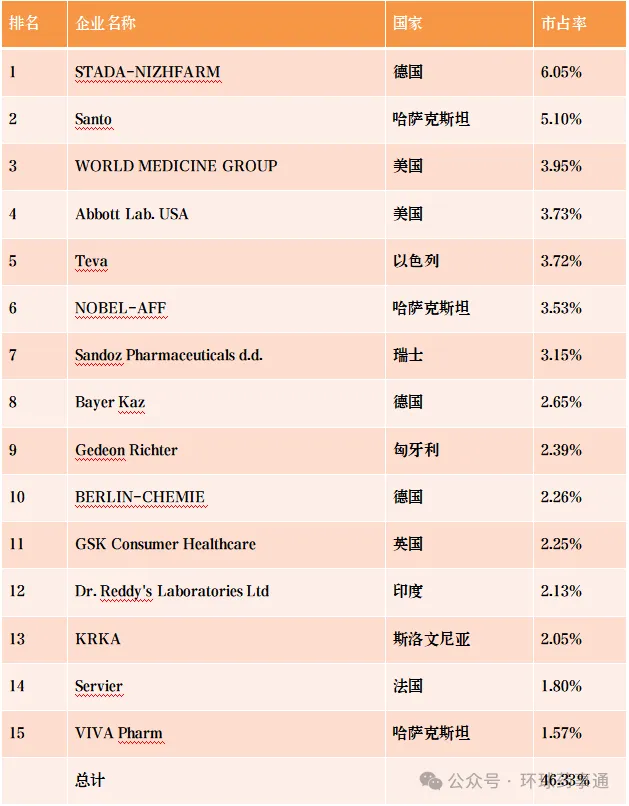
According to Proxima Research data, Kazakhstan’s retail and hospital pharmaceutical consumption market reached 1.077 trillion tenge (approximately $2.15 billion) from January to November 2024. Retail channels accounted for 56% of the market, while public procurement represented 44%. Hospital medications (18.4%) and outpatient medications (19.7%) dominated this segment. In terms of volume, retail consumption accounted for 82.6%, with most products sold through pharmacies. The hospital channel represented 17.4% (including 10.5% for inpatient drugs and 5.5% for over-the-counter drugs).
Top 15 Companies by Retail Pharmaceutical Sales Volume in Kazakhstan, January-November 2024
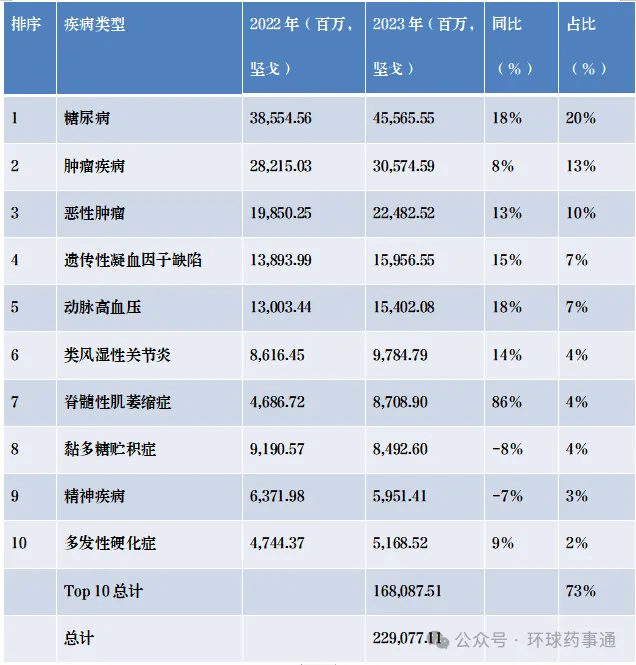
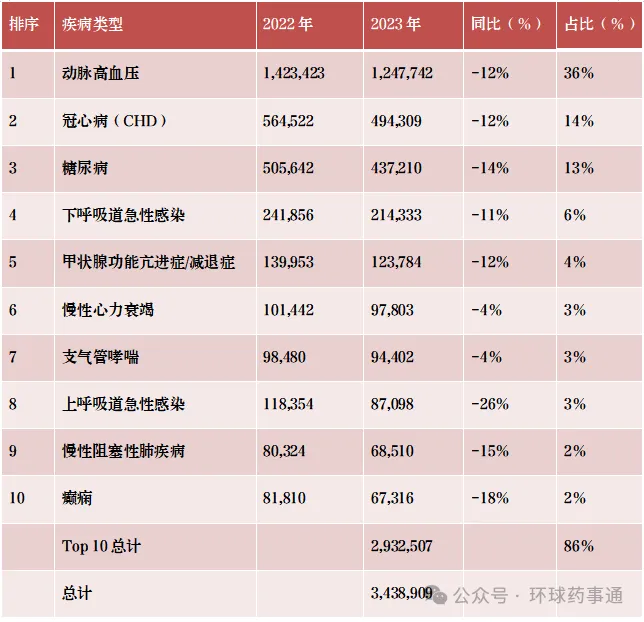
Since 2020, Kazakhstan has implemented the Compulsory Social Health Insurance (CSHI) system, expanding coverage to include 105 additional diseases. Consequently, under both the GVFMC and CSHI frameworks, disease coverage has been extended to encompass 131 conditions. Treatment costs for the top 10 diseases in 2023 totaled 168.09 billion tenge (approximately $330 million), accounting for 73% of the total outpatient drug procurement budget expenditure.
Top 10 Diseases Covered by Outpatient Drug Procurement (by Budget Amount)
Top 10 Diseases Covered by Outpatient Drug Procurement (by Number of Patients)
4. Market Access Regulations and Compliance Pathways
Market entry into Kazakhstan requires adherence to Eurasian Economic Union (EAEU) and local regulations, with core requirements as follows:
Registration and Certification System
Drug Registration: Approval is granted by Kazakhstan’s National Expert Evaluation Center for Pharmaceutical Products under the Ministry of Health. Submissions must include technical documentation, clinical trial data, and ISO 13485 certification. Effective July 1, 2021, drug registration transitioned from Kazakhstan’s domestic system to EAEU regulations and standards. Drugs manufactured and registered under domestic regulations may only circulate domestically until the end of 2025.
Medical Device Classification: Categorized into Classes I-IV based on risk level. High-risk products (e.g., implants) require clinical trial data, with on-site inspections mandated for certain categories.
Labeling and Language: Product information must be labeled in Kazakh or Russian, including ingredients, indications, and production standards, ensuring consistency with registration documents.
Policy Incentives and Cost Optimization
VAT exemption applies to pharmaceutical manufacturing, medical device imports, and consumables. Ethanol-based pharmaceutical manufacturers are exempt from excise tax.
Import licensing requirements abolished to streamline customs clearance and reduce logistics costs.
Domestic drug and raw material registrations are free. Special economic zone enterprises enjoy full corporate income tax and land tax exemptions.
Compliance Oversight and Risk Management
Enterprises must establish after-sales service systems and undergo regular regulatory inspections. Effective July 2024, all retail-packaged pharmaceuticals (excluding veterinary drugs and vaccines) must affix Data Matrix QR codes containing a 14-digit product code and 13-digit random serial number to enhance traceability.
Personal medication imports are limited to “reasonable quantities for personal use” (land/sea duty-free allowance: €200, under 31 kg). Special medications require a doctor’s prescription and declaration.
Market Opportunities and Cooperation Models
Blue Ocean Demand and Technology Gaps
Medical Equipment: Annual demand growth for electronic diagnostic devices, endoscopes, and medical laser equipment reaches 95%, with domestic production rates below 10%. According to 2020 Kazakhstani Ministry of Health statistics, the country’s pharmaceutical sector comprises 96 enterprises, 22 of which manufacture medical devices. The government plans to add 7 new production facilities by 2024, prioritizing the introduction of advanced technologies for CT, MRI, and other high-end equipment.
Chronic Disease Medications: Significant shortages exist for diabetes, oncology, and tuberculosis treatments, with local enterprises meeting only 30% of demand. Extensive collaboration opportunities exist for generic and innovative drugs.
Traditional Medicine: Recognition of Chinese medicine is growing in Kazakhstan. Anhui University of Chinese Medicine collaborates with the Almaty China-Kazakhstan International Medical Center to offer acupuncture and herbal therapies. Free clinics in 2024 served over 2,000 patients, advancing localized production of traditional Chinese medicines.
Exemplary Cases of China-Kazakhstan Corporate Collaboration
Kelun Pharmaceutical (Kazakhstan) Co., Ltd.: As one of the largest investments by a Chinese private enterprise in Kazakhstan, Kelun Pharmaceutical leveraged the Belt and Road framework to establish Central Asia’s most advanced infusion solution production base in the suburbs of Almaty. The facility’s annual production capacity serves Kazakhstan and neighboring countries. Its products have secured registration in Uzbekistan and Kyrgyzstan, with active expansion into the Russian market underway. Through technology transfer and local talent development, Kelun has introduced GMP-compliant production systems and quality testing technologies to Kazakhstan. Additionally, the company has donated over $2 million worth of medical supplies to local healthcare institutions, establishing itself as a benchmark project for China-Kazakhstan industrial capacity cooperation.
Biopharmaceutical Cooperation Project: Kazakhstan plans to invest $101.7 million to build its first GMP-compliant biopharmaceutical plant, with an annual capacity of 15 million doses of veterinary vaccines (including sheep pox and avian influenza). This aims to replace 78% of the country’s reliance on imported veterinary drugs. The project has attracted Chinese pharmaceutical companies to participate through technical equity investment, leveraging Kazakhstan’s abundant livestock resources to jointly develop animal health products.
Genetic Testing Technology Cooperation: In July 2024, BGI Group partnered with Technopark Biogen to establish the Astana Genetic Center (AGC) within Kazakhstan’s National Biotechnology Center. BGI not only provided advanced genetic sequencing and data analysis equipment but also introduced cutting-edge technologies like non-invasive prenatal testing (NIPT).
Internationalization of Traditional Medicine: Xi’an Mingren Pharmaceutical collaborated with Kazakhstan’s Mukhabat Hospital to introduce the nationally recognized intangible cultural heritage product “Ma Mingren Plaster” to the Kazakh market. Plans are underway to establish a Traditional Chinese Medicine (TCM) diagnostic and treatment center in the Aktau region. Additionally, the “Chinese Herbal Medicine Specimen Hall” inaugurated at the China-Kazakhstan Khorgos International Border Cooperation Center has become a hub for showcasing traditional Chinese medicine culture and facilitating trade, promoting cross-border circulation of medicinal materials like licorice and Cistanche deserticola.
5.Government Procurement and Policy Window
Medical Equipment Government Procurement: Kazakhstan’s Ministry of Health launched the “Health Year” initiative in 2024, adding seven new medical equipment production facilities and issuing tenders for high-end equipment like CT and MRI scanners. Chinese enterprises actively participated in bidding. Additionally, in December 2023, Xi’an Dayi Group signed a strategic cooperation agreement with Kazakh partners to enhance Kazakhstan’s radiotherapy services through medical equipment exports and technology sharing.
International Exhibitions and Resource Matching: The 2024 Kazakhstan International Healthcare Exhibition (KIHE 2024) attracted global giants like GE Healthcare and Roche. Concurrently, Kazakhstan announced an expansion plan for its free medical services catalog, adding 120 new drugs to the government procurement list. Chinese pharmaceutical companies leveraged the exhibition to connect with local distributors. For instance, MinKang Bio established in-depth cooperation with Kazakhstan’s largest medical device and pharmaceutical distributor to jointly develop the Kazakh and Central Asian markets.
Cross-Border E-Commerce and Distribution Networks: Following a 2,000-ton licorice order facilitated by Xinjiang’s cross-border platform, Chinese logistics firms accelerated expansion into Central Asia. For instance, YTO Express launched construction of a sorting center and industrial park in Almaty to enhance regional logistics efficiency.
Technical Cooperation and Localization Pathways
High-End Formulation R&D: Kazakhstan’s Ministry of Health partnered with Swiss-based Roche Holding to establish an anti-cancer drug production base in Nur-Sultan. The facility plans to commence production of targeted breast cancer drugs by 2025, with technology transfer covering active pharmaceutical ingredient synthesis and formulation processes. Chinese pharmaceutical companies can draw on this model to develop chronic disease treatments.
Modernization of Traditional Chinese Medicine: In July 2024, the “Chinese Herbal Medicine Specimen Museum” was established at the China-Kazakhstan Khorgos International Border Cooperation Center. This facility serves as a platform for medical exchange between China and Kazakhstan, attracting greater corporate and commercial interest in the herbal medicine industry. It aims to promote trade in traditional Chinese medicine not only between China and Kazakhstan but also with neighboring Central Asian nations.
Risk Challenges and Response Strategies
Strengthening Intellectual Property Protection
Patent infringement cases in Kazakhstan are growing at an average annual rate of 15%. Enterprises should proactively file PCT international patents and establish brand protection mechanisms through local partners. Chinese companies are advised to register core technology patents in advance, establish joint laboratories with Kazakhstani research institutions, and enhance compliance through technology licensing.
Distribution System Optimization
With 80% of pharmaceuticals circulating through private channels in Kazakhstan, it is advisable to form strategic alliances with local leaders like SK Pharma and Chimpharm. Alternatively, leverage the warehousing and logistics advantages of special economic zones (e.g., Astana Innovation Park) to shorten supply chain response times.
Regulatory Tracking
Kazakhstan’s regulations undergo frequent updates. Closely monitor developments in EAEU technical regulations (e.g., TR EAEU 037/2016), complete product certification in advance, and avoid market access disruptions caused by standard changes. For instance, Kazakhstan will mandate electronic drug labeling in 2024, requiring enterprises to connect to the national traceability platform. Companies must upgrade their ERP systems in advance and collaborate with local IT service providers to develop traceability modules compliant with EAEU standards to ensure compliance.
6.Future Outlook
Kazakhstan’s pharmaceutical market is transitioning from “import dependency” to “independent innovation,” while China-Kazakhstan pharmaceutical cooperation is upgrading from single-product exports to a full “R&D-production-service” value chain. By 2025, China-Kazakhstan pharmaceutical trade is projected to exceed $500 million. Leveraging the Belt and Road Initiative, technological advantages, and geographical proximity, Chinese enterprises can expand into neighboring markets including Central Asia and Russia. Through technological empowerment, resource integration, and localized operations, China is deeply engaging in Kazakhstan’s pharmaceutical modernization. With the establishment of the China-Kazakhstan International Medical Center and deepening cooperation in traditional medicine, synergies in health sectors will continue to unfold, setting a benchmark for regional healthcare collaboration.
*Original Statement* This content is originally created by the Western Medicine Department of the China Chamber of Commerce for Import and Export of Medicines and Health Products. No part of this content may be used in any form—including reproduction, excerpting, copying, or mirroring—without prior authorization from this official account. For authorization requests, please contact us via the account backend/comment section at the end of the article or directly at: 010-5803-6261, [email protected]. Please specify the official account ID and the article you intend to reproduce.