
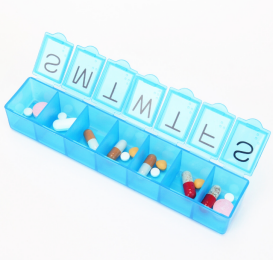
A Boîte à pilules is nothing like the simple plastic container once used only to separate tablets by day. In today’s fast and health-conscious world, pill boxes play a critical role in medication management; they help organize lifestyles, support preventive healthcare, and sustain long-term wellness plans. With increasing age among the population and common chronic conditions together with an increasingly complex daily supplement regimen, this formerly trivial purchase has become an important decision of choosing exactly which Pill Box is right.
From the perspective of developing an appropriate logic for its selection, knowledge of how to assess a Pill Box goes beyond looks or basic compartment counts. The correct choice lies in usage scenarios and user habits; health requirements and portability needs; material safety, long-term reliability, all play roles in consideration. This article attempts to probe into Pill Box from the logic of decision making and selection so as to help readers acquire knowledge on choosing best best-fitting solutions with different lifestyle & health management preferences.
Understanding Why Pill Box Selection Matters More Than Ever
Changing Medication Habits in Modern Life
More medications now than before. Most people take several prescriptions, vitamins, and supplements-all at different times of the day. Pill Boxes help organize all routines by ensuring a dose is not missed or taken twice over confusion.
From a selection point of view, increasing complexity in the day-to-day drug regimen means that an all-in-one Pill Box is rarely adequate. The right design choice directly influences adherence, safety, and health outcomes.
Pill Box as a Health Management Tool
More and more, a Pill Box is seen as something to help manage health-it keeps people consistent, makes them accountable, helps in forming a habit-instead of just being passive storage. To caregivers, it can be used for monitoring if the right medications are taken.
They should consider how well their choice of Pill Box integrates with other tools within a health management system instead of looking at it as an isolated accessory.

Core Factors to Consider When Choosing a Pill Box
Identifying the User Profile
The primary step toward choosing a Pill Box is to identify its user. Different profiles of users shall be given different priorities in the design.
Some users are just handling short-term medication management, like antibiotics or recovery prescriptions. Others depend on long-term daily medication for chronic conditions. Seniors, busy professionals, travelers, caregivers, and fitness enthusiasts have their own specific expectations from a Pill Box.
A good pill box matches up with how a person moves around, remembers things, goes about their day, and lives their life
Frequency and Timing of Medication Intake
Some people take their medication once a day, while others need to consume it several times within the same day. This directly affects Pill Box choice.
A simple daily pill box may work for a basic routine, but more complex routines require multidose designs. Users should consider, when choosing a Pill Box, how clearly the box separates doses by time and how intuitive that separation is in its actual physical layout during use.
Pill Box Capacity and Compartment Design
Matching Compartment Size to Real Usage
The size of the compartments is among the most overlooked criteria. Pills, capsules, soft gels, and supplements-all varying widely in sizes and shapes. If the compartment spaces are insufficient, there will be overcrowding, which results in mixing or breaking some of the pills.
From a selection standpoint, it is essential to match compartment dimensions to actual medication volume rather than relying on generic descriptions.
Balancing Compactness and Usability
A Pill Box should be compact for easy storage, but at the same time large enough to cover daily needs. If it is too small, then accessing and placing items inside may not be very comfortable; if large in size, then carrying becomes an issue of inconvenience.
Whether the Pill Box is meant to be used at home or while traveling, or carried throughout the day forms a basis for selecting among different available options. Realistic daily scenarios should guide selection.
Material Safety and Quality Considerations
Importance of Food-Grade and Medical-Safe Materials
Material is a major factor in choosing any Pill Box. Since pills are something consumed, the box should be made of a safe, non-toxic material that does not react with medication.
Most good-quality Pill Boxes are made from food-grade plastics or polymers approved for use in contact with foods and medicines, sometimes also containing parts made from stainless steel. Long-term safety must be assured by materials that do not absorb moisture or smells and have no chemical interaction.
Durability and Long-Term Reliability
A pill box is opened and closed several times a day. If it has weak hinges, a fragile lid or an ineffective locking mechanism, it will break or spill very soon.
From the selection logic point of view, durability matters as much as initial appearance. A good Pill Box retains its structural integrity long enough to ensure consistent medication management until another one can logically replace it.
Portability and Lifestyle Compatibility
Choosing a Pill Box for Home Use Versus On-the-Go
Home Pill Boxes and Travel Pill Boxes can both be large and clear or small and compact, but most Home-use Pill Boxes are big, clear, easy to open with high capacity, whereas the Travel-use Pill Box is more compact with tight lids.
The user has to choose in what form he wants his organizer stationary one/ a daily portable case, or both. Only then will it suit his lifestyle so that the possibility of leaving it somewhere unused becomes minimal.
Travel and Daily Carry Considerations
For frequent travelers or professionals who spend long hours away from home, portability becomes a key decision factor. Lightweight construction, spill-proof closures, and discreet design all contribute to usability on the move.
Selecting a Pill Box that fits easily into bags, pockets, or luggage improves consistency in medication routines regardless of location.
Ease of Use and Accessibility
Opening Mechanisms and Ergonomic Design
Easy opening is a feature much appreciated by seniors or people with weak hands. The Pill Box should be easy to open and at the same time secure enough not to spill accidentally.
From the point of view of selection, ergonomic design has a direct bearing on user independence and confidence. Smooth edges, transparent lids clearly showing contents inside compartments, intuitive opening mechanism-all these features add up in making it usable every day.
Visibility and Labeling Clarity
Clear labeling helps prevent dosing errors. Many Pill Box designs include printed days, time indicators, or color-coded sections.
Choosing a Pill Box with high visibility and easy-to-read markings supports accurate medication intake, especially for users managing multiple prescriptions.
Hygiene and Maintenance Considerations
Cleaning and Moisture Control
Smooth-surfaced medication containers are easier to clean, and drying also becomes easy. Choose a Pill Box that has minimal crevices inside it for effective washing and drying.
The other important aspect is controlling moisture. A good Pill Box protects the pills from humidity, which makes them ineffective; hence, select designs that minimize the accumulation of moisture.
Odor and Residue Management
Some medications and supplements produce strong odors or residue. Choosing materials that resist odor absorption ensures long-term cleanliness and comfort.
From a selection perspective, hygiene features contribute to both safety and user satisfaction.
Pill Box Design and Psychological Impact
Encouraging Consistent Medication Habits
Design is the silent driver of habits. If the Pill Box is visually organized and pleasant, it motivates the user to keep coming back consistently; if it’s confusing or not so attractive, then that habit never gets formed.
Choose a Pill Box whose design makes you feel good about your new daily routine because feeling good emotionally drives long-term consistency.
Reducing Stress and Cognitive Load
Clear organization reduces mental effort. A well-chosen Pill Box minimizes decision-making stress by clearly showing whether a dose has been taken.
This is especially important for individuals managing multiple medications or caregivers overseeing someone else’s routine.
Selection Logic for Different User Groups
Seniors and Long-Term Medication Users
For seniors, selection should prioritize readability, ease of opening, and reliable structure. Larger compartments, bold labels, and sturdy construction enhance safety and independence.
A Pill Box chosen with senior needs in mind becomes a daily support tool rather than a source of frustration.
Busy Professionals and Active Lifestyles
For active users, portability, discretion, and speed of access are key. A compact Pill Box that integrates seamlessly into daily routines supports consistency without drawing attention.
Selection should focus on lightweight designs that do not compromise security.
Caregivers and Family Use
Caregivers often manage medication for others. In this case, selection logic shifts toward visibility, accountability, and error prevention.
A Pill Box that clearly displays remaining doses and simplifies tracking helps caregivers ensure proper medication adherence.
Pill Box as Part of Preventive Healthcare
Supporting Long-Term Health Planning
A Pill Box maintains a regimen of vitamins or supplements that support preventive healthcare in the same way prescribed medication supports consistency is critical in long-term health management.
Choosing a Pill Box for remedies rather than one that aligns with preventive goals enhances its role as a companion to a daily health-reactive tool.
Integration Into Wellness Routines
Modern wellness routines often include supplements, hydration habits, and scheduled health practices. A Pill Box fits naturally into this structure when chosen thoughtfully.
From a selection standpoint, alignment with broader wellness habits increases long-term usage and perceived value.
Market Trends Influencing Pill Box Selection
Rising Demand for User-Centered Design
Consumers increasingly expect everyday health tools to be intuitive and well-designed. This trend influences Pill Box selection by prioritizing usability over minimal cost.
Understanding this shift helps users choose designs that meet modern expectations for comfort and functionality.
Focus on Longevity and Reusability
As sustainability awareness grows, many users prefer durable, reusable Pill Boxes over disposable options. Selection increasingly favors quality construction and long service life.
This approach aligns cost efficiency with environmental responsibility.
Evaluating Long-Term Value When Choosing a Pill Box
Cost Versus Performance Perspective
Rather than focusing solely on price, effective selection considers long-term performance. A higher-quality Pill Box often provides better reliability, safety, and user experience over time.
Evaluating value through durability and usability ensures better outcomes than short-term savings.
Adaptability to Changing Needs
Health routines evolve. A good Pill Box selection anticipates potential changes, such as increased medication frequency or new supplements.
Choosing a flexible design supports long-term relevance without frequent replacement.
Future-Oriented Thinking in Pill Box Selection
Anticipating Lifestyle and Health Changes
A forward-looking selection approach considers future scenarios. Whether related to aging, travel frequency, or wellness goals, adaptability enhances the usefulness of a Pill Box.
This mindset transforms the Pill Box from a temporary solution into a long-term health management tool.
Aligning With Personal Organization Systems
People increasingly value tools that integrate smoothly into their personal organization systems. A Pill Box that complements daily planners, routines, and habits is more likely to be used consistently.
Selection should reflect this holistic perspective.
Conclusion: Choosing a Pill Box as a Thoughtful Health Decision
Choosing a pill organizer is ultimately a decision about health, consistency, and daily well-being. Approaching the choice through structured selection logic enables the identification of designs that truly support medication routines rather than complicating them.
An appropriately selected Pill Box matches user habits and lifestyle needs with safety considerations and the objective of good health in the long run. It minimizes mistakes, sustains adherence, and makes medication management organized and free from stress. In this world where minute daily routines leave gigantic effects on health, selecting a suitable Pill Box is both substantial and practical standing investment in daily well-being.