



I. Overview of China’s Medical Dressing Exports in 2024
In 2024, China’s medical device exports accelerated their recovery trend, reaching $48.75 billion in value—a 7.3% year-on-year increase. Concurrently, exports of medical dressings stabilized, totaling $4.026 billion for the year. Although this represented only a marginal 0.8% year-on-year growth, it marked a decisive break from the export decline observed since 2023. With demand recovering in major European and American markets, exports shifted from negative to positive growth. Overall export volume of China’s medical dressings increased by 15.3% year-on-year in 2024, while export prices decreased by 12.6% compared to the previous year. This represents a moderation in price competition pressure relative to 2023 (when prices fell by 31.1% year-on-year).
Simultaneously, the export product structure of medical dressings continued to optimize and upgrade, with particularly notable growth in Advanced Wound Care (AWC) products. In 2024, AWC exports reached $870 million, surging 19.3% year-on-year, while export volume increased by 24.7%. AWC’s share within the medical dressing category further expanded from 18.2% to 21.6%, demonstrating a pronounced trend toward “high-quality development.”
Medical dressings are characterized by essential demand, high usage frequency, and widespread application. In 2024, international demand for medical dressing products showed a stable upward trend. Excluding masks and protective clothing, China’s exports of medical dressing products reached $2.66 billion, an 11.3% year-on-year increase (2023 exports: $2.39 billion). Notably, exports to the United States reached $1.08 billion, a 20.5% year-on-year increase.
In 2024, traditional bulk dressings—cotton wool, gauze, and bandages—remained the primary export products, with annual exports totaling $1 billion. This represented a 5.8% year-on-year increase in export value, an 8.9% rise in export volume, and a 2.9% decrease in export price. The traditional medical dressing market is highly competitive. Growth in bulk products has stabilized the foundation of medical dressing exports. This year, the easing of price competition for bulk products has stabilized overall market prices, though the price decline still warrants vigilance.
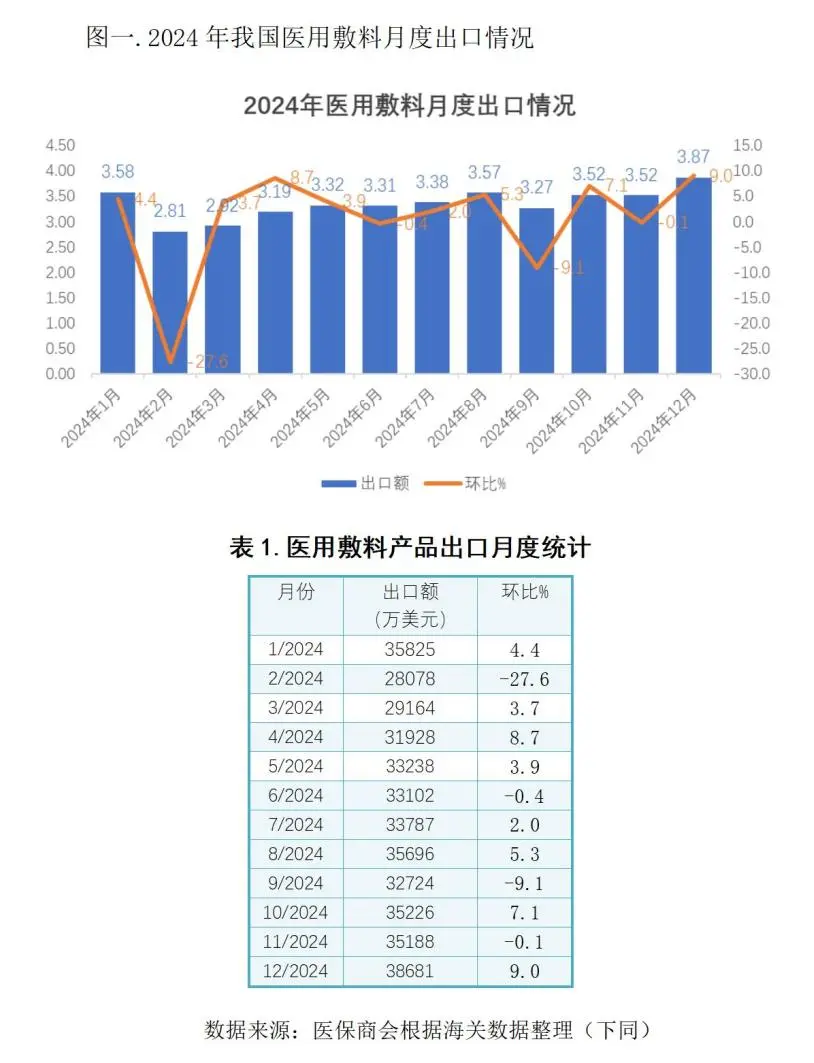
Monthly Statistics: Decline Gradually Slowing
In 2024, China’s medical dressing exports showed a slight upward trend overall. Although export volumes declined in February due to the Spring Festival, demand for China’s medical dressings in international markets has gradually rebounded amid fluctuations.
The United States is China’s largest export market for medical dressings.
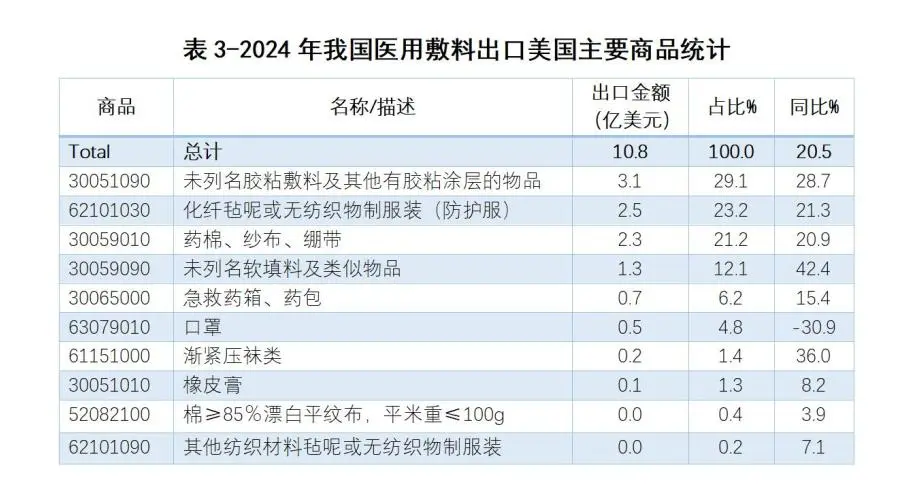
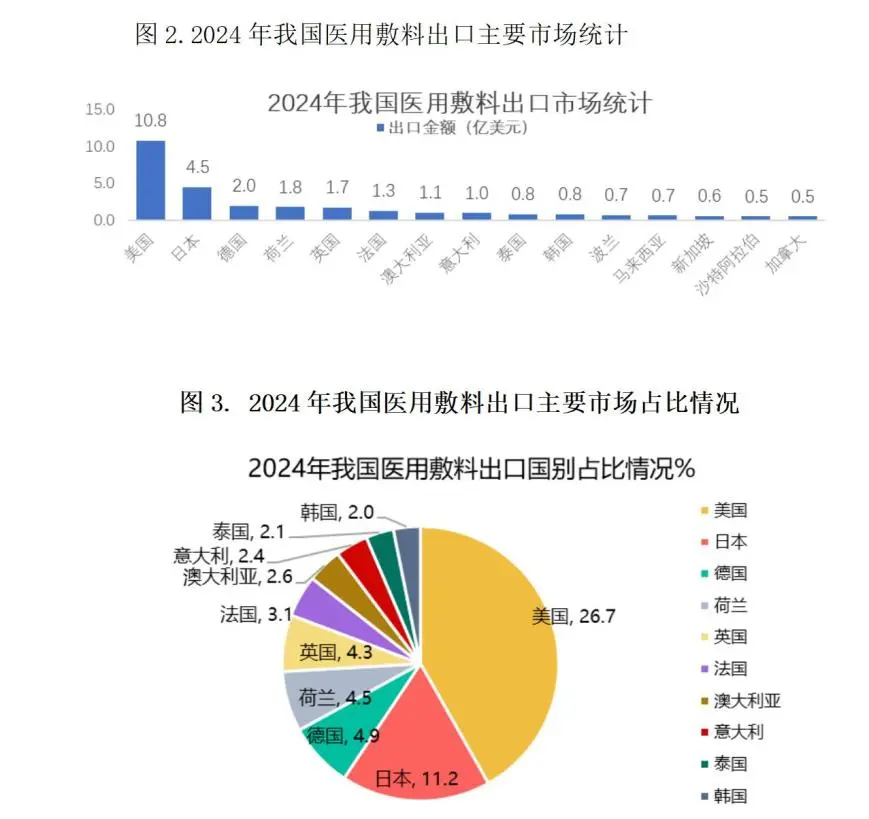
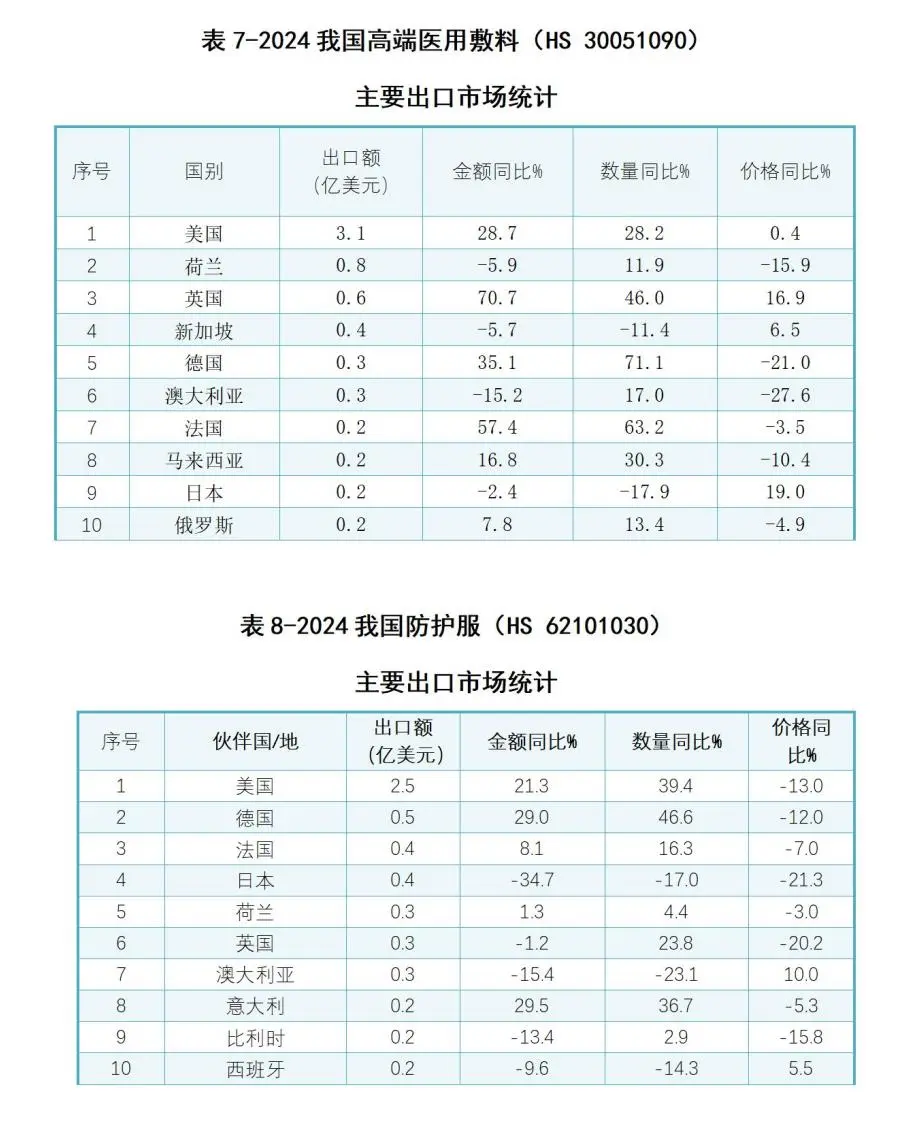
In 2024, China exported medical dressings to 205 countries and regions worldwide. The United States, Japan, and Germany are the primary export destinations. Among these, the United States is China’s largest export market, accounting for over a quarter (26.7%) of China’s total exports to the global market. Exports to the U.S. reached $1.08 billion, a year-on-year increase of 20.5%. The most exported medical dressing product to the U.S. was high-end medical dressings, with exports totaling $310 million, a year-on-year increase of 28.7%. Exports of protective clothing resumed growth, rising by 21.3%. and traditional dressings grew by 20.9%. The growth in exports to the U.S. was driven not only by recovering market demand but also by efforts to avoid additional tariffs and other trade barriers imposed after President Trump took office, leading to a surge in advance shipments and rush exports.
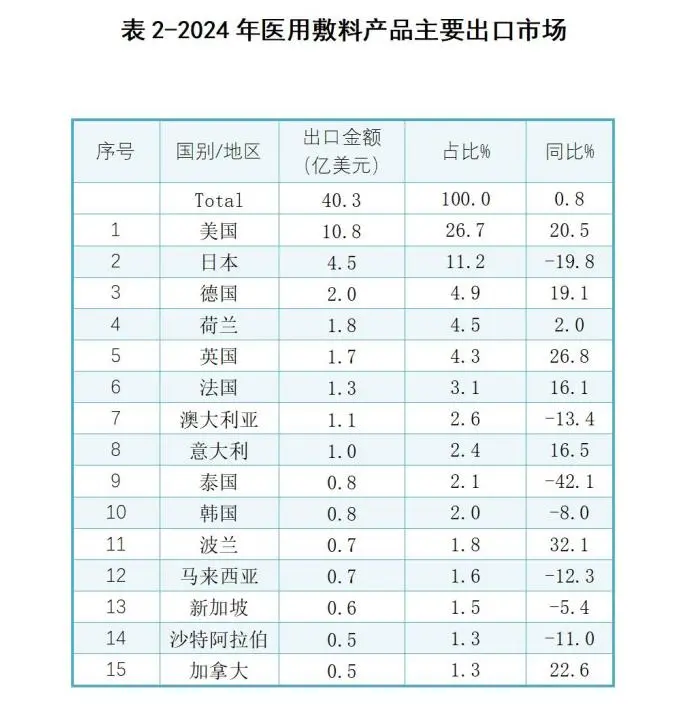
Japan is our second-largest export market, with exports totaling $450 million, a year-on-year decrease of 19.8%. This decline has significantly slowed compared to 2023. Among our exports to Japan, medical dressings remain the largest category, primarily driven by masks, with exports valued at $310 million, down 23% year-on-year. This was the primary driver of the overall decline in exports to Japan. Conversely, traditional medical dressings like cotton wool, gauze, and bandages saw a 4.1% year-on-year increase in exports to Japan. Germany is China’s third-largest export market, with exports totaling $200 million. The top export items to Germany were cotton wool, gauze, and bandages, valued at $50 million, representing an 18.1% year-on-year increase. Exports of protective clothing and high-end medical dressings to Germany also saw substantial growth of 29% and 35.1% year-on-year, respectively.
Statistics on Export Categories of Medical Dressings
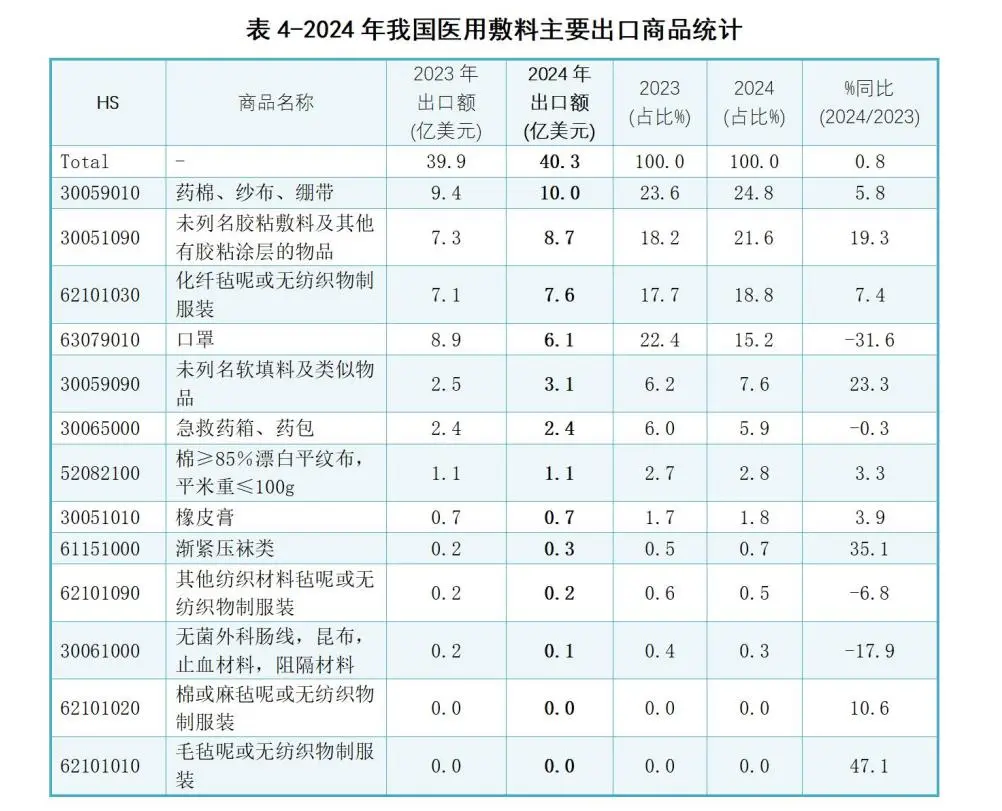
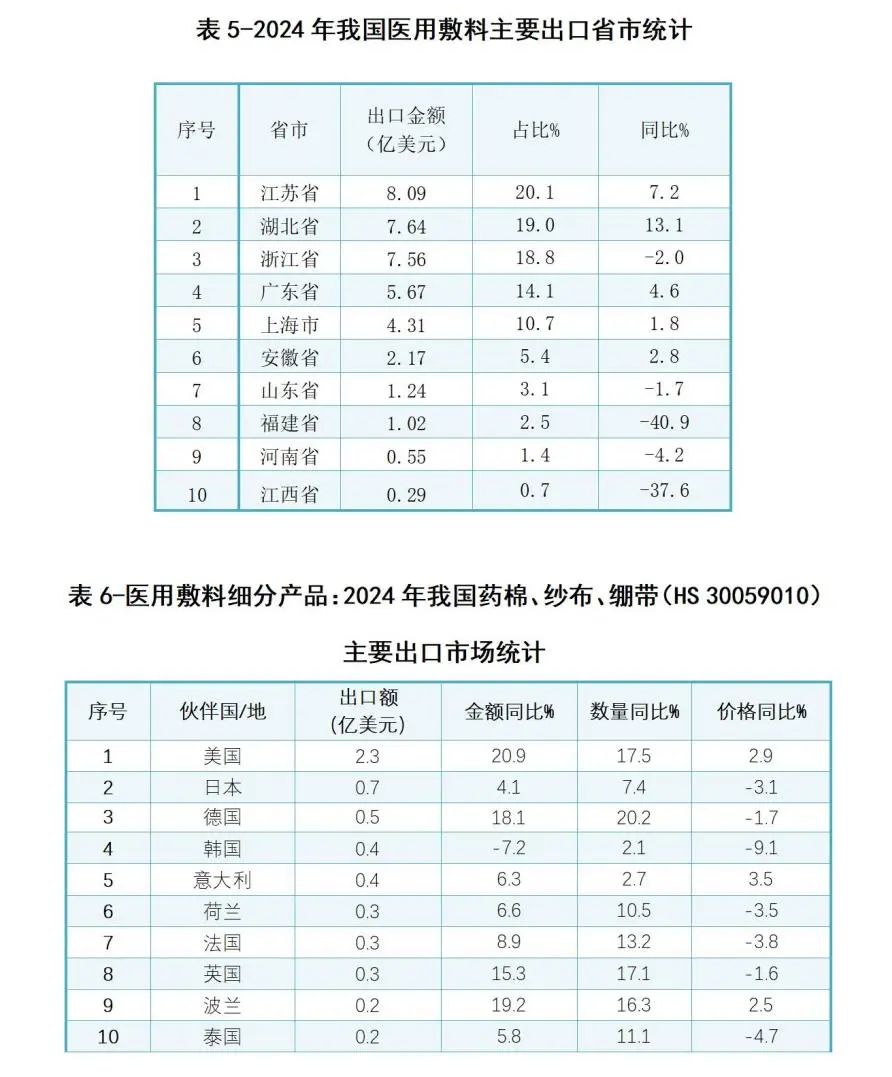
Medical dressing exports are highly concentrated among certain provinces and municipalities. In 2024, Jiangsu Province ranked first in China’s medical dressing exports.
The top five exporting provinces and municipalities accounted for a combined export value of $3.327 billion in 2024, representing 82.64% of the national total. The top ten provinces and municipalities collectively exported approximately $3.853 billion, constituting 95.74% of the total, indicating significant export concentration. Jiangsu emerged as China’s largest exporter of medical dressings, achieving exports worth $809 million—representing 20.1% of the national total and marking a 7.2% year-on-year increase. Hubei ranked second with exports valued at $764 million, reflecting a 13.1% year-on-year growth.
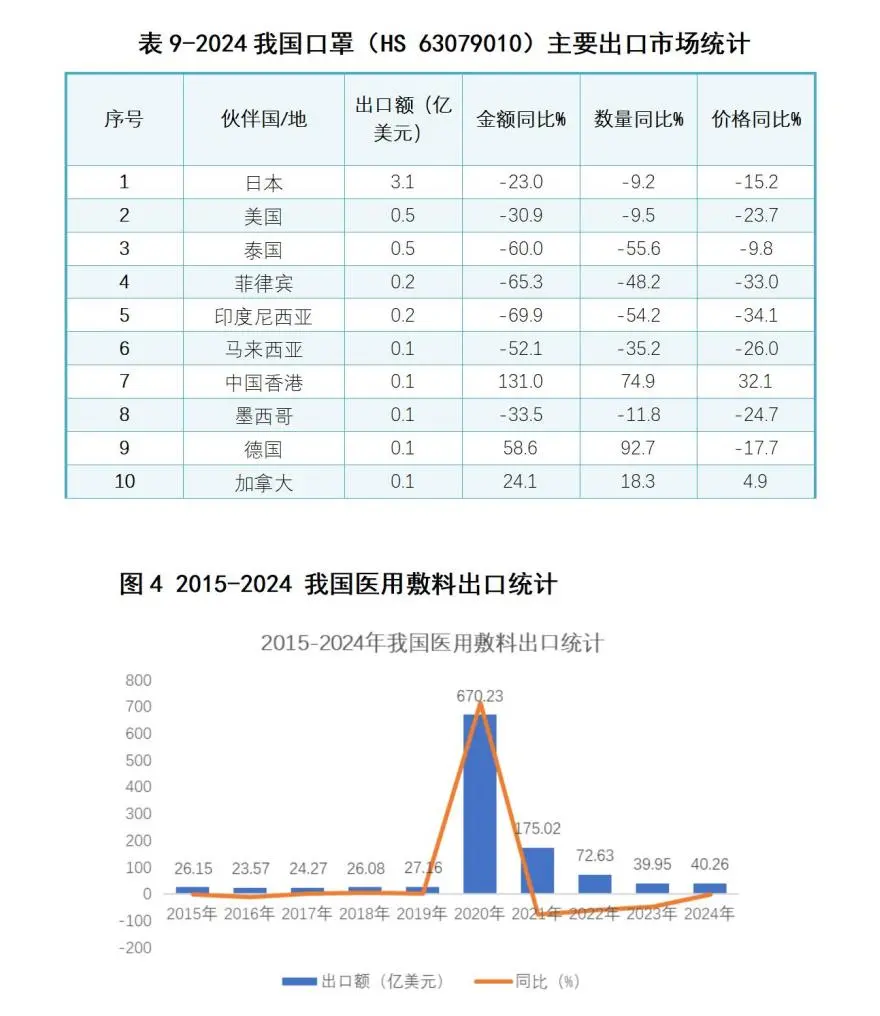
Globally, China’s medical dressing exports have consistently ranked first worldwide. From 2015 to 2024, China’s medical dressing exports grew from $2.615 billion to $4.026 billion, representing a compound annual growth rate (CAGR) of 4.41%. Exports of high-end medical dressings surged from $297 million to $870 million, achieving a CAGR of 11.35%. Through years of development and accumulation, China’s medical dressing industry has seen a growing concentration of leading players. These companies possess robust manufacturing capabilities and R&D innovation strength, with continuous enhancements in technology, quality control, supply chain and industrial chain management, digital transformation capabilities, AI empowerment, and ESG responsibility. Leveraging the industry brand recognition and reputation built in recent years, they have further solidified their value chains and established both domestic and international online and offline distribution channels, laying a solid foundation for continuously increasing their share of the international market.
In 2024, China’s medical dressing exports withstood pressure, halting the year-on-year decline and achieving positive growth. This fully demonstrates that after nearly 40 years of development, China’s medical dressing industry retains its resilience and vitality as a global hub for production, R&D, and exports. However, we must clearly recognize that economic globalization is facing headwinds, with rising instability and uncertainty. Under the high pressure of U.S. Section 301 tariffs, medical dressing exporters have been compelled to adopt indirect strategies. Currently, traditional medical dressing supply chains and leading production capacities are exploring relocation to Southeast Asian markets like Vietnam, Indonesia, Thailand, and Cambodia, as well as Latin American markets such as Mexico. Challenges including relocation risks, costs, labor issues, and cultural differences are intensifying. Yet, amid surging uncertainties surrounding U.S. tariffs, the industry largely maintains a cautious, exploratory stance. Therefore, the industry must closely monitor shifts in international trade policies and promptly adjust export strategies to mitigate risks. It should continue deepening efforts to build new productive forces centered on technological innovation, leveraging AI and digitalization to enhance quality and efficiency. By harnessing the advantages of the industry’s full industrial chain, it can accumulate momentum for future development.
Although the overall economic outlook for 2025 is expected to be better than last year, the absence of an international governance system and the impact of geopolitical factors mean that pressure on foreign trade may not necessarily ease compared to last year. While business confidence is crucial, it is equally important to adopt a bottom-line mindset. Key attention should be paid to emerging trends in foreign trade this year, including the development of the “cross-border e-commerce + overseas warehouses” model, cooperation on intermediate goods and overseas industrial parks, as well as new drivers of foreign trade such as intellectual property protection, green trade, digital trade, and the internationalization of standards. The Chamber will continue to stand with all enterprises in the industry, actively calling for unity to tackle challenges and vigorously exploring diversified markets. We will promote exchanges and cooperation among enterprises, continuously seeking new pathways for global expansion. Strengthening industry self-regulation, we will guide all links in the industrial chain to establish reasonable pricing structures and prevent homogenized cutthroat competition caused by blind expansion. Under the leadership of industry leaders, we will continue to drive technological innovation, develop new productive forces, and propel China toward global leadership in medical dressing technology. (Secretariat of the Medical Dressing Branch, China Chamber of Commerce for Medical Insurance)